Six months ago, I sat in a dental chair and heard five words I wasn’t prepared for: “Your gums are receding here.”
Six months ago, I sat in a dental chair and heard five words I wasn’t prepared for: “Your gums are receding here.”
She pointed at the screen showing my X-ray. Two lower incisors. The gum line had pulled back almost two millimeters. Not catastrophic — yet. But the trajectory was clear. If nothing changed, I was looking at exposed roots, increased sensitivity, and eventually, the kind of intervention nobody wants to budget for.
I was 38. I brushed twice a day. I flossed — okay, not every single day, but more often than most people I know. I used a name-brand electric toothbrush that cost over $200. I thought I was doing everything right.
“You’re brushing too hard,” my dentist said. “And that brush of yours — it’s probably making it worse.”
That was the moment I started looking for an electric toothbrush for gum care. Not just a brush with a “sensitive” sticker on the box. Something genuinely engineered to protect gum tissue without compromising on clean.
What I found changed how I think about brushing entirely.’=
The Problem Was Never My Technique
My dentist’s comment about brushing too hard stuck with me. She wasn’t wrong — I applied more pressure than necessary — but the more I researched, the more I realized technique was only part of the picture.
Here’s what most people don’t know: your electric toothbrush might be designed in a way that makes gum damage almost inevitable. Not because of a manufacturing defect. Because of the fundamental physics the entire category is built on.
Most premium electric toothbrushes compete on vibration frequency. 31,000 strokes per minute. 42,000. 62,000. The logic is intuitive — faster must mean cleaner — but it overlooks a critical variable: at 40,000 strokes per minute, a brush head oscillates roughly 667 times every single second. The margin between “cleaning the gum line” and “impacting the gum line” narrows to a fraction of a millimeter.
Now add human variability. A tired Tuesday morning. A rushed post-lunch brush. One slightly heavy hand, and soft tissue takes the hit. Multiply by twice a day, 365 days a year, for a decade.
That’s not user error. That’s a design flaw masquerading as a feature.
What the AirJet X5 Does Differently
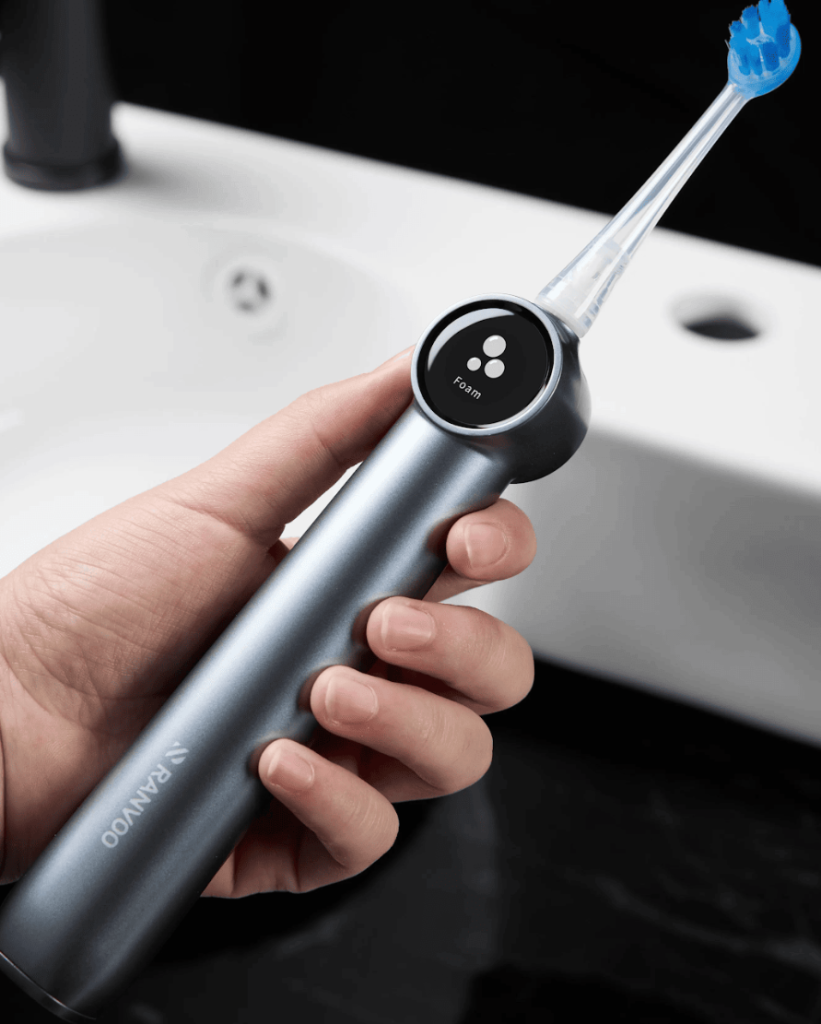
The RANVOO AirJet X5 operates at 15,600 to 21,600 strokes per minute — roughly half the frequency of leading sonic brushes. When I first read that, I’ll admit I was skeptical. Lower frequency sounded like less power. Less power sounded like worse cleaning.
I was wrong, and here’s why: the AirJet X5 doesn’t rely on mechanical friction as its primary cleaning mechanism. It uses AirJet 2.0, a fluid-dynamic system that generates millions of microbubbles from your ordinary water-toothpaste mixture. These bubbles penetrate between teeth — the spaces where over 80% of cavities begin and where bristles physically cannot reach — then collapse to disrupt plaque biofilm through a process called cavitation.
Think of it this way: a traditional electric toothbrush is a scrub brush. The AirJet X5 is more like a pressure washer that uses bubbles instead of brute force. The bristles still make contact. The vibration still helps. But the heavy lifting — especially in the tight spaces that matter most — is done by fluid dynamics, not friction.
This is how the AirJet X5 can claim a 97% plaque removal rate and Grade 1 cleaning efficiency while operating at speeds that feel gentle enough for compromised gums. The two ideas aren’t contradictory. They’re complementary, once you stop assuming that more vibration equals better results.
The Details That Actually Matter for Gum Health
Three things about the AirJet X5 surprised me during the first week of use. None of them are headline features, but all of them matter for gum care.
First: the 12° micro-oscillating sweep. Most oscillating brushes swing through arcs of 20° to 30°. That sounds like a technical triviality until you realize that a wider arc means the brush head edge covers more distance per stroke — and has more opportunity to strike gum tissue. Twelve degrees is narrow enough to stay precisely on tooth surfaces. You don’t need to be a dental hygienist to keep the brush where it belongs.
Second: the 0.01 mm bristle tips. I’d never thought about bristle diameter before this experience. Under a microscope, poorly manufactured bristles look jagged — like broken twigs. Every stroke drags those micro-edges across your gum line. The AirJet X5’s bristles are one-tenth the width of a human hair, with a 99.99% end-rounding rate. The difference is tactile — brushing feels soft, almost cushioned, even against the sensitive gum margins around my lower incisors.
Third: the rubber-coated brush head backing. Every electric toothbrush user knows the jarring sensation of hard plastic hitting adjacent teeth when the head shifts mid-stroke. The AirJet X5 wraps the back of its brush head in TPE rubber that absorbs impact. The chatter disappears. It’s a small engineering choice with an outsized effect on daily comfort.
One Month Later: What Changed
After 30 days with the AirJet X5, I can report three things with confidence.
My gums don’t bleed anymore. Not once, not even a trace. I’d accepted occasional pink-tinged toothpaste foam as normal for years. It isn’t.
My teeth feel dentist-clean after every session — a subjective measure, I know, but the tongue test doesn’t lie. The smoothness persists longer between brushes than it did with my previous brush.
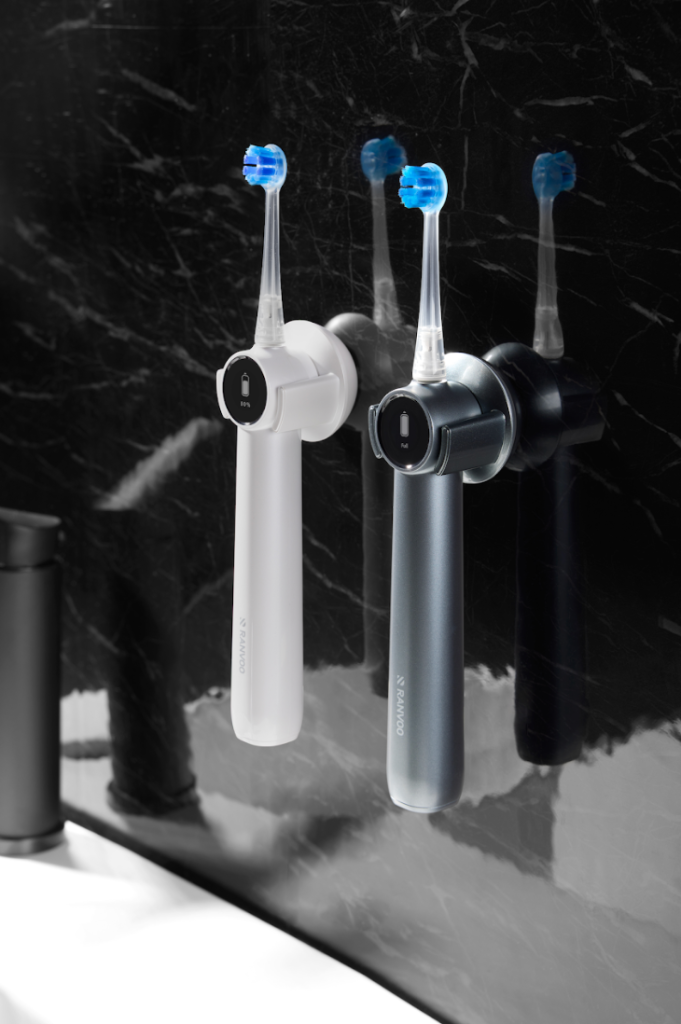
And my bathroom counter is cleaner, because the magnetic wall mount with integrated wireless charging got the toothbrush off the counter entirely. No pooled water. No mystery gunk around the charging base. Just a brush that snaps onto the wall with a satisfying click and charges while it hangs.
Visit Fapello in Uk for more.
The Bottom Line
I’m not going to tell you the AirJet X5 will reverse gum recession — nothing short of surgery can do that. What I will say is this: if you’ve noticed pink in the sink, if your dentist has mentioned gum pocket depth numbers that are trending in the wrong direction, or if you simply want to stop worrying that your cleaning tool is quietly contributing to long-term damage, it’s worth reconsidering what you’re brushing with.
An electric toothbrush for gum care shouldn’t be a specialty product for people with diagnosed problems. It should be the category standard. Because gum health isn’t a niche concern — it’s the foundation everything else sits on. You can fill a cavity. You can whiten enamel. You can’t grow back gum tissue once it’s gone.
Your gums are patient. They’ll put up with a lot before they complain. But they’re keeping score. And at some point, the bill comes due.