
A small pendant seems like an easy purchase. It does not dominate the room, it fits above a narrow counter, and it usually costs less than a large chandelier. Then the electrician holds it near the ceiling and the questions begin. Is it hanging too high? Should there be one light or three? Why does such a small fixture suddenly look so noticeable?
Mini pendants are unforgiving because there is very little to distract from their position. If a large fixture sits two inches off centre, its width may hide the mistake. A narrow pendant makes the same error obvious. Choosing the right shape is only half the job; the location, drop and relationship to the furniture below matter just as much.
Start with the Surface Below
When a pendant hangs above an island, table or nightstand, it should belong to that object rather than to the entire room. This sounds obvious, but many ceiling boxes are centred according to the walls. Furniture rarely follows those measurements perfectly.
A kitchen island may have an overhang on one side, a sink placed slightly off centre or stools that stop short of the end. Before installing mini pendant lights, mark the actual working area with painter’s tape. Decide whether the lights should follow the full countertop, the seating section or the clear preparation space.

The pendants follow the usable length of the island rather than the dimensions of the room.
For a pair or row, check the composition from the doorway as well as from beside the counter. Equal mathematical spacing can still look wrong if one pendant overlaps a tall cabinet or appears too close to a window. Shifting the whole group slightly may create a calmer view without affecting the light on the surface.
Do Not Choose the Number First
People often decide they want three pendants before choosing the fixture. Three feels balanced, particularly over an island, but it is not automatically the right answer. A short counter may look cramped beneath three shades, while two slightly wider fixtures can create a stronger and less cluttered arrangement.
Cut circles from paper or cardboard to match the diameter of the shades. Tape them to a broom handle or ask someone to hold them roughly in position. This quick test shows whether the group has enough breathing room. It is far more reliable than imagining a six-inch or ten-inch diameter from a product description.
The visual material also changes how large a pendant feels. Clear glass takes up less apparent space because the room remains visible through it. A solid black cone of the same dimensions creates a heavier outline. Crystal sits somewhere between the two: transparent, but active because it reflects light and nearby colours.
A Bedside Pendant Needs Different Rules
Hanging a small pendant beside the bed frees the nightstand for books, water and a phone. It can also make a basic bedroom feel more considered. However, the fixture must be positioned for someone who is sitting or lying down, not for a person standing in the middle of the room.
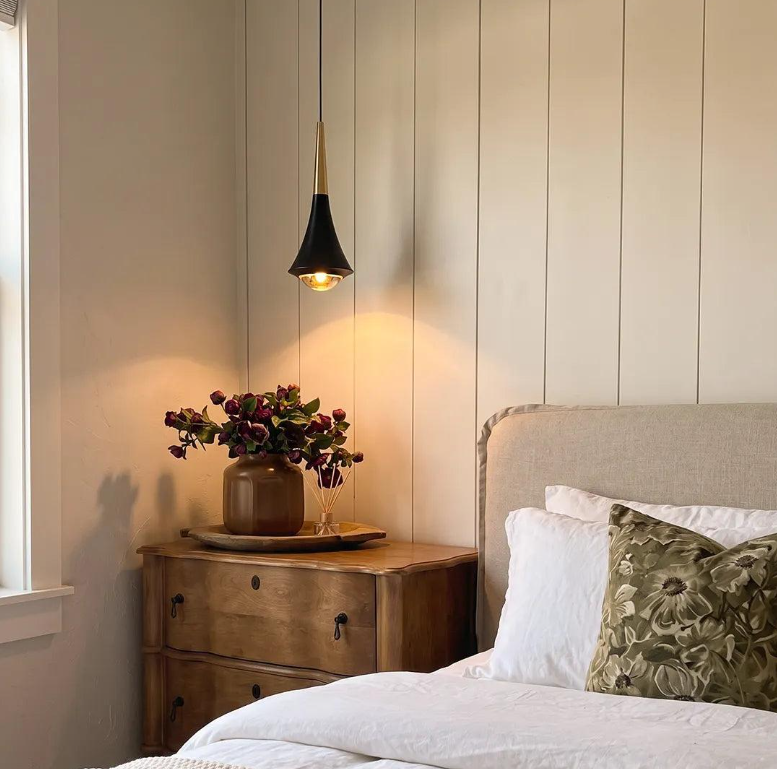
A narrow downward beam keeps the nightstand useful without lighting the entire bedroom.
Sit against the pillows before finalising the height. The bulb should not shine directly into your eyes, and the shade should not hang where you might hit it while reaching for something. If the pendant is intended for reading, check where the light falls on an open book. A beautiful glow on the wall is not helpful if the page remains dark.
Think about controls early. A switch across the room defeats much of the convenience of bedside lighting. A wall switch within reach, a suitable dimmer or a smart control can make the arrangement practical rather than merely decorative.
Crystal Does Not Have to Look Formal
The word “crystal” often brings to mind a large traditional chandelier, but small crystal pendants can work in much simpler interiors. The key is restraint. A single crystal element, compact ring or clean cylindrical shade adds reflection without filling the room with tiers and decorative arms.
When browsing crystal pendant lights, consider what will be visible behind the fixture. Crystal looks busiest against patterned wallpaper, open shelving or a crowded kitchen. Against a plain wall, quiet cabinetry or a dark painted surface, the reflections are easier to appreciate.
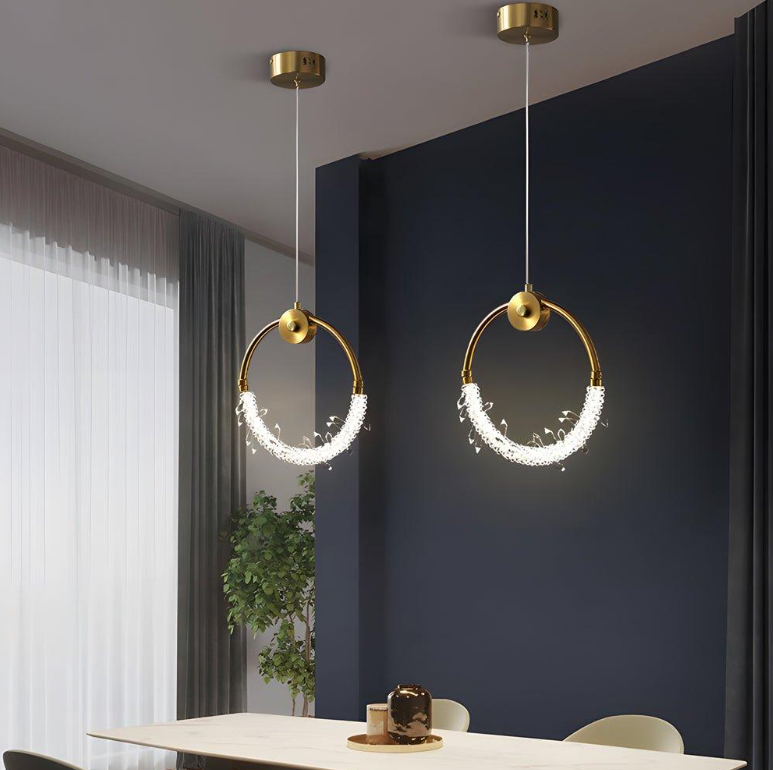
A simple background allows the compact crystal design to stand out without feeling overly formal.
Also look at the fixture when it is switched off. During daylight hours, the crystal will reflect windows, cabinets and movement through the room. Clear pieces tend to disappear into a light space, while smoky or amber crystal creates a stronger decorative presence.
The Drop Changes More Than the Height
A pendant hung too close to the ceiling can look like a fixture with an awkwardly long cord. Lowering it helps the shade relate to the counter or table below. Go too low, though, and it interrupts conversation, blocks the view across the kitchen or becomes an obstacle during cleaning.
Above a kitchen island, placing the bottom of the pendant roughly 30 to 36 inches above the countertop is a useful starting point. This is not an absolute rule. A tall household, a high ceiling or a larger shade may call for adjustment. Stand on both sides of the island and make sure the fixture does not sit directly in anyone’s line of sight.
If the cord or suspension cable is adjustable, leave a little extra length during installation until the room has been used for several evenings. Living with the light for a week often reveals whether it needs to move up an inch or two. Permanent cutting can wait.
Check the Bulb Before the Fixture Arrives
Mini pendants frequently use exposed or partially visible bulbs, making colour temperature and brightness especially noticeable. A very bright bulb inside a clear shade may produce glare rather than useful illumination. Frosted bulbs soften the effect, while warm light usually feels more comfortable in bedrooms and dining areas.
A pendant should not be expected to light an entire kitchen by itself. It can brighten the island and contribute to the atmosphere while recessed lights, under-cabinet lighting or wall lights handle the rest of the room. Giving a small fixture one clear job makes it much easier to choose the right output.
Before installation, hang a paper model from string and leave it in place overnight. Walk around it, sit beneath it and view it from the next room. A mini pendant may be small, but the empty space surrounding it is part of the design. Get that relationship right, and the fixture will look deliberate rather than simply suspended from the nearest electrical box.